
Jesus was led out to be crucified along with two criminals. They were taken to a place called The Skull, where Jesus was crucified between them, one criminal on His right and the other on His left.
As Jesus hung on the cross, people stood watching. The religious leaders mocked Him, saying that He had saved others and should save Himself if He really was God’s Messiah. The Roman soldiers also mocked Him. Above Jesus was a sign identifying Him as the King of the Jews.
At first, Jesus was being mocked from all sides. One of the criminals joined in and challenged Jesus to save Himself and them.
But the other criminal had a change of heart.
He rebuked the first criminal and basically said, “Don’t you even fear God? We are being punished justly for what we did, but this man has done nothing wrong.”
Then he turned to Jesus and said:
“Jesus, remember me when you come into your kingdom.”
Jesus answered him:
“Truly I tell you, today you will be with me in paradise.”
That criminal died beside Jesus with nothing left to offer. He could not undo his crimes. He could not perform good works, rebuild his life, or prove himself. All he could do was admit his guilt and place his trust in Jesus.
And Jesus accepted him.
-Luke 23
A simple Q&A about Jesus, Christianity, and the Gospel.
Maybe you've never been to church.
Maybe you went as a kid but haven't thought much about God since.
Maybe you've heard the name Jesus your entire life, but if somebody actually asked you who He was, you'd have trouble giving an answer beyond, "The guy from the Bible."
Fair enough.
So who is this Jesus fella, anyway?
Let's start there.
Yes.
Jesus of Nazareth was a Jewish man who lived roughly 2,000 years ago in ancient Judea and Galilee, then under Roman rule.
Christianity doesn't begin with "once upon a time."
Jesus lived. He taught. He gathered disciples. He was crucified under Roman authority.
But that's only the beginning of the story.
Jesus is the Son of God—God who came to us in human flesh.
The Gospel of John opens with an unusual description of Jesus, calling Him "the Word":
"In the beginning was the Word, and the Word was with God, and the Word was God."
— John 1:1 (CSB)
Then John tells us:
"The Word became flesh and dwelt among us."
— John 1:14 (CSB)
Jesus wasn't simply a wise teacher with some good ideas about being nice to people.
God stepped into His own creation.
He became one of us.
Because something has gone terribly wrong between humanity and God.
The Bible calls it sin.
Before you picture some angry preacher screaming about everything you're doing wrong, let's explain what that actually means.
Sin isn't merely breaking a list of religious rules.
It's rebellion against God.
We lie. We hate. We envy. We lust. We hurt people. We're selfish. We put ourselves above others. We know what's right and deliberately do otherwise.
Underneath all of it is the same basic problem:
We want to run our lives without God.
Romans puts it plainly:
"For all have sinned and fall short of the glory of God."
— Romans 3:23 (CSB)
Notice that little word: all.
Not "all those terrible people over there."
All of us.
Maybe you are.
You may be generous, honest, hardworking and kind.
But the question isn't whether you're better than your neighbor.
The standard isn't your neighbor.
It's God.
Imagine somebody saying, "I've only lied occasionally, hated a few people, been selfish sometimes and ignored God for most of my life—but compared with some people, I'm doing great."
That might make you a decent neighbor.
It doesn't make you sinless.
And none of us are.
No.
God is holy and just. Sin matters to Him.
But God also loves us.
Probably the most famous verse in the Bible says:
"For God loved the world in this way: He gave his one and only Son..."
— John 3:16 (CSB)
God didn't look at broken humanity and say, "Figure it out yourselves."
He came after us.
That's Jesus.
Jesus taught about God's Kingdom. He healed the sick. He cared for people society ignored. He confronted hypocrisy. He forgave sins. He called sinners to repentance.
But ultimately, Jesus came to accomplish something we couldn't do ourselves.
He lived without sin.
Then He was betrayed, arrested, beaten and crucified.
His death wasn't merely an execution.
He willingly gave His life for us.
Because sin carries a debt we cannot pay ourselves.
There's an old story that helps explain it.
There once was a great king who ruled his kingdom with two qualities for which he was known throughout the land:
He was perfectly loving, and he was perfectly just.
One day, the king discovered that someone had been stealing from the royal treasury.
The thefts continued, and eventually the king issued a decree:
"Whoever is caught stealing from the royal treasury will receive forty lashes."
Everyone understood what that meant. Forty lashes was such a severe punishment that the guilty person would almost certainly die.
Eventually, the thief was caught.
Word spread through the palace. The guards brought the guilty person before the king.
Then came the terrible discovery.
The thief was the king's own daughter.
The courtroom fell silent.
Everyone waited to see what the king would do.
If he simply forgave his daughter and ignored the sentence, perhaps he could call himself loving—but he could no longer call himself just.
He had declared the law publicly.
A crime had been committed.
A sentence had been pronounced.
Justice demanded that the sentence be carried out.
But this was his daughter.
He loved her.
So what could the king possibly do?
On the day of the punishment, his daughter was brought before the kingdom and prepared to receive the forty lashes.
The executioner raised the whip.
Then the king stood from his throne.
He removed his royal robe.
He walked down from the throne and approached his daughter.
Without changing the law...
Without pretending the crime had never happened...
Without declaring the punishment unnecessary...
The king wrapped himself around his daughter.
Then he looked at the executioner and said:
"Proceed."
The whip came down.
Once.
Twice.
Again and again.
The king took every lash intended for his daughter.
All forty.
When it was finished, the king lay dead.
The sentence had been carried out.
Justice had been satisfied.
And his daughter walked free.
Not because her crime didn't matter.
Not because the law didn't matter.
Not because the king simply looked the other way.
She was free because the king who loved her took her punishment upon himself.
The story isn't Scripture. It's an illustration.
But it helps us understand what happened at Calvary.
God is perfectly loving.
And God is perfectly just.
Our sin is real, and God doesn't simply pretend it never happened.
The Bible says:
"For the wages of sin is death, but the gift of God is eternal life in Christ Jesus our Lord."
— Romans 6:23 (CSB)
We were the guilty ones.
But the King stepped down from His throne.
Jesus entered His creation.
He lived the life we failed to live.
And when the time came for judgment, He willingly stood in our place.
Isaiah described what Jesus would do centuries before the crucifixion:
"But he was pierced because of our rebellion, crushed because of our iniquities; punishment for our peace was on him, and we are healed by his wounds."
— Isaiah 53:5 (CSB)
That's the Gospel.
Justice said the debt had to be paid.
Love said God would pay it Himself.
At the cross, those two things met.
Jesus took what belonged to us so that He could give us what belonged to Him.
We brought the sin.
Jesus brought the righteousness.
We were guilty.
Jesus took the sentence.
We owed the debt.
Jesus paid it.
And that's why, hanging on the cross, Jesus said:
"It is finished."
— John 19:30 (CSB)
Not, "I'm finished."
It is finished.
The debt was paid.
The King had taken our place.
Yes.
His body was taken down from the cross and placed in a tomb.
For three days, it looked like the story was over.
It wasn't.
Jesus rose from the dead.
Not symbolically.
Not merely because His teachings "lived on."
The man who had been crucified walked out of the grave.
His disciples saw Him.
They spoke with Him.
They ate with Him.
They touched Him.
The Apostle Paul summarized the Gospel this way:
"Christ died for our sins according to the Scriptures, that he was buried, that he was raised on the third day according to the Scriptures."
— 1 Corinthians 15:3–4 (CSB)
The resurrection changes everything.
Death didn't defeat Jesus.
Jesus defeated death.
Here's where people often make things much more complicated than they need to be.
You don't earn it.
You can't buy it.
You don't accumulate enough good deeds.
You don't get into heaven because your good deeds finally outweigh your bad ones.
Salvation is a gift.
Ephesians says:
"For you are saved by grace through faith, and this is not from yourselves; it is God's gift—not from works, so that no one can boast."
— Ephesians 2:8–9 (CSB)
Jesus already did the saving.
Your part is to repent and believe.
It doesn't mean becoming perfect overnight.
The basic idea is turning around.
You're going one direction—living for yourself, separated from God—and you turn toward Him.
It means acknowledging:
I've sinned. I need God. I cannot save myself. Jesus, I'm trusting You.
That's repentance and faith.
No.
That's like saying you need to get healthy before seeing the doctor.
Come as you are.
Jesus spent time with sinners, outsiders and people religious society had written off.
That doesn't mean He told them their sin didn't matter.
He called them away from it.
But grace comes before cleanup.
You don't change yourself enough for Jesus to accept you.
You come to Jesus, and He begins changing you.
That's precisely why the Gospel means good news.
Peter denied Jesus.
Paul persecuted the church.
The thief crucified beside Jesus had nothing left to offer God.
He couldn't spend the next twenty years doing good deeds. He couldn't build a church. He couldn't give money to charity. He couldn't undo his past.
He simply turned to Jesus.
And Jesus told him:
"Truly I tell you, today you will be with me in paradise."
— Luke 23:43 (CSB)
There isn't one category called "people Jesus can save" and another called "people who went too far."
You haven't out-sinned the cross.
If you're breathing, you can call upon Him.
Going to church doesn't save you.
Sitting inside a church makes you a Christian about as much as sitting inside a garage makes you a pickup truck.
Jesus saves you.
But followers of Jesus aren't meant to live their faith entirely alone.
Church is a community of believers learning Scripture, worshipping God, helping one another, serving others and growing together.
Will you find imperfect people there?
Absolutely.
You'll be one of them.
Good. Ask them.
God isn't threatened by questions.
Read.
Investigate.
Ask difficult questions.
Most importantly, read about Jesus yourself.
A great place to start is the Gospel of John.
Don't worry about understanding the entire Bible immediately.
Start with Jesus.
Read what He said.
Look at what He did.
See who He claimed to be.
Then start there.
You don't need fancy religious language.
You don't need to know how to "pray correctly."
Talk to God honestly.
"God, I don't even know if You're there. But if You are, I want to know the truth. Show me who Jesus is."
Then investigate.
Read one chapter of John each day.
Ask questions.
Seek Him.
Jesus said:
"Ask, and it will be given to you. Seek, and you will find. Knock, and the door will be opened to you."
— Matthew 7:7 (CSB)
Then it's time to follow Him.
Believing in Jesus isn't merely agreeing that a man named Jesus existed.
Jesus calls us to follow Him.
Learn His teachings.
Pray.
Read Scripture.
Love people.
Forgive.
Serve.
Turn away from sin when you recognize it.
And when you screw up—and you will—get back up and keep following Him.
Christianity isn't the story of perfect people impressing God.
It's the story of broken people being rescued by Him.
God created us and loves us. We sinned and separated ourselves from Him. We cannot repair that separation by being good enough. Jesus Christ, the Son of God, came into the world, lived without sin, died on the cross for our sins, and rose from the dead. God offers forgiveness, reconciliation and eternal life freely to anyone who repents and puts their faith in Jesus Christ.
That's the Gospel.
Christianity isn't ultimately about joining a club.
It isn't about becoming "religious."
It isn't about pretending you've got everything figured out.
It's about Jesus.
Jesus once asked His disciples:
"But you," he asked them, "who do you say that I am?"
— Matthew 16:15 (CSB)
Two thousand years later, that's still the question.
Not what your parents say.
Not what your pastor says.
Not what some guy on the internet says.
Who do you say Jesus is?
That's a question every one of us has to answer.
There are many Bible translations because ancient Hebrew, Aramaic, and Greek don't always translate perfectly word-for-word into modern English. Some translations prioritize literal wording, while others prioritize easy-to-understand language.
The most important thing is to read the Bible. Don't let the number of translations keep you from God's Word.
For serious reading and study, we recommend translations that stay close to the original biblical texts without adding unnecessary interpretation, including the CSB (Christian Standard Bible), ESV (English Standard Version), KJV (King James Version), and Geneva Bible.
They may use different words or sentence structures, but the goal is the same: faithfully communicate what the original text says—not what someone thinks it should say.
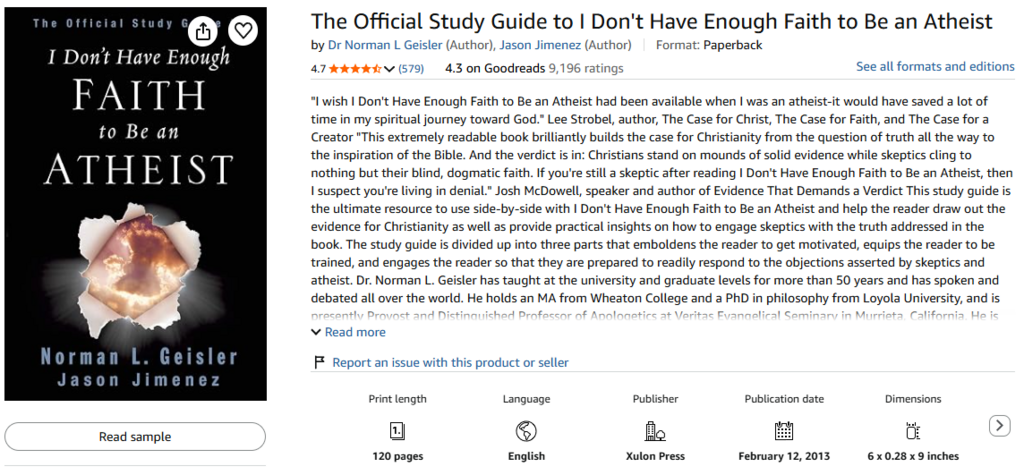
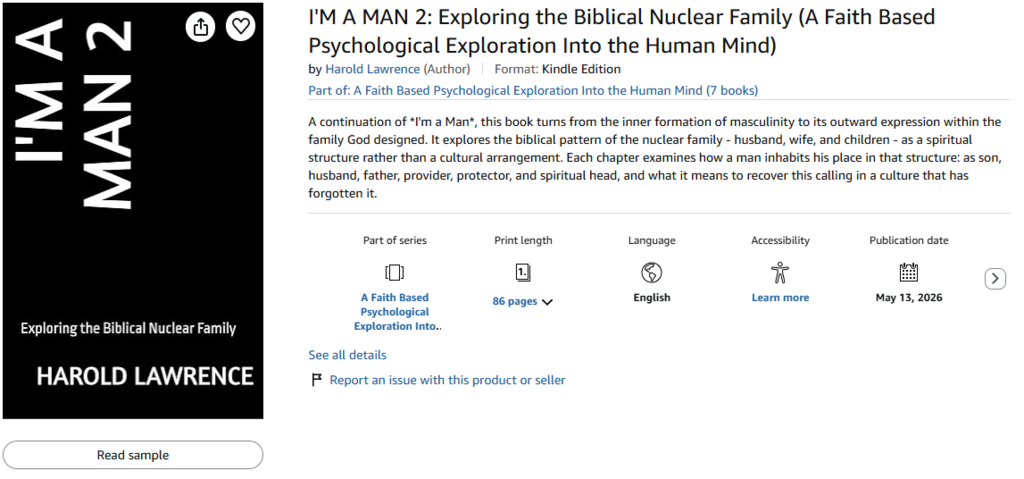
100% of all proceeds of all the books in the entire series below are donated to local churches.
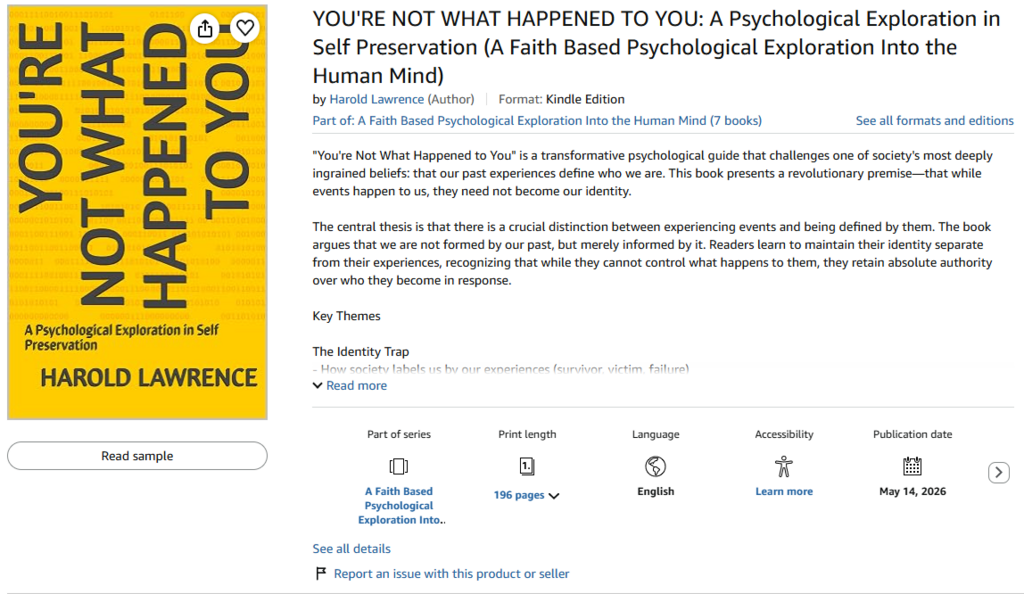
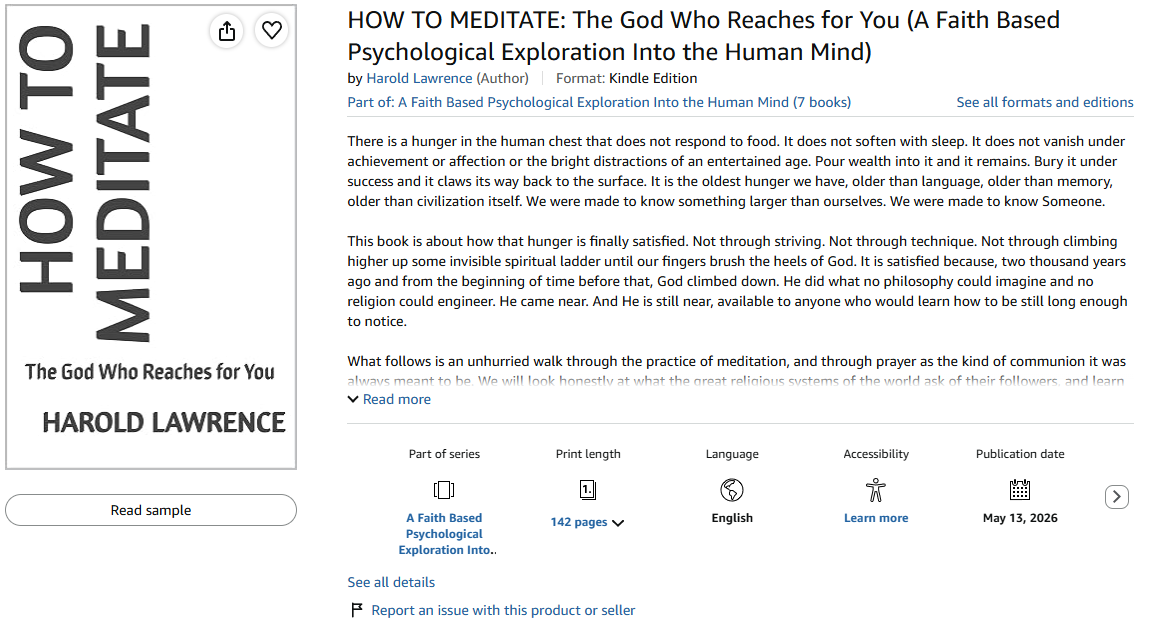
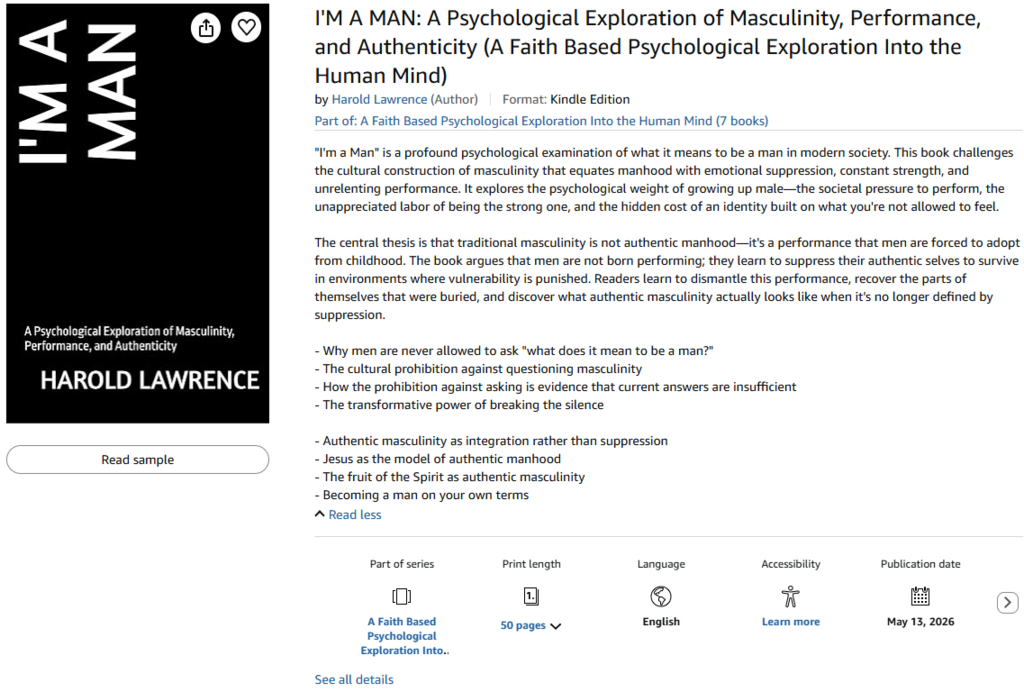
This is not your average Christian Group. Christ saved our lives each in individual ways, and we want to share our stories with you, connect you with local groups or online chat groups that can help make life a bit more easy to navigate.
As it turns out; life does have a road map.
Some of us struggled with Drugs & Alcohol
Others with Pain, self harm
Others were just plain lost.
We are not a church, not founded by a pastor, or religious organization. We are simply a group people who have been called to share the Gospel and save your life. There may be local Christian support groups that help, and we hope we can help direct you in the right path toward a prosperous relationship with Christ.
We are not sure what we are doing... If you can help please reach out.